Euler's pentagonal number theorem
Tags: #theorem
Statement
The partition function satisfies the following recurrence relation:
for
Note that
Equivalence of two statements
First let us justify why the two statements are equivalent. Suppose we know that
Then, multiplying this with the generating function for the partition function yields
From this, we see that
With Jacobi's Triple Product
This is a special case of Jacobi's triple product formula with
Franklin's bijective proof (1881)
Now let us proceed with the proof of the second equation in the statement.
where we note that the coefficient of each
which is the (number of partitions with distinct, even number of parts) - (number of partitions with distinct, odd number of parts).
We claim that this is equal to
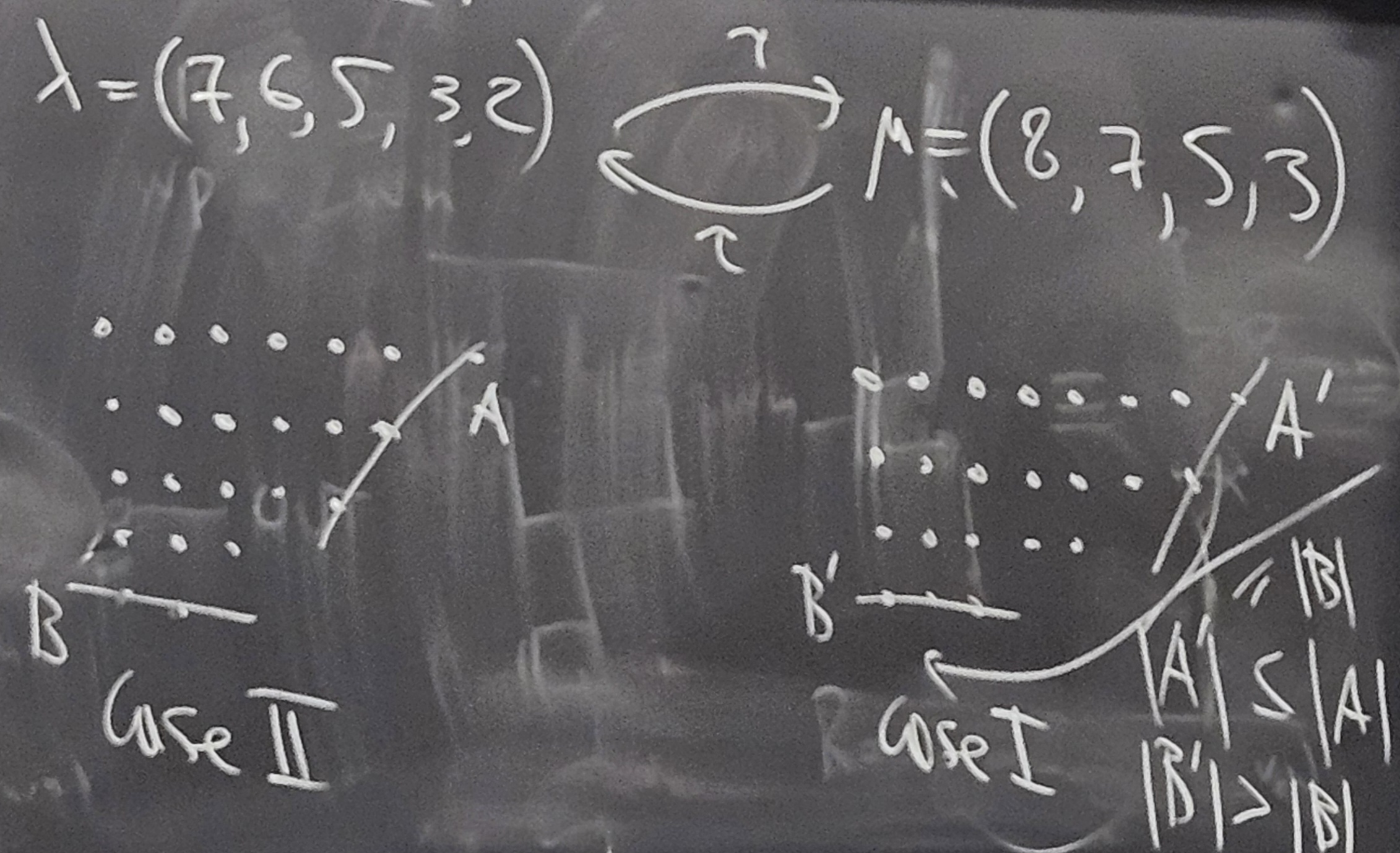
Consider the Ferrers shape of a partition of
- Let
be the set of dots on the diagonal that starts at the last dot in the first row. - Let
be the set of dots in the last row.
Define the involution
- if
, move all the dots in to the bottom to make a new row. - Note that since it is strictly less, this creates a new, distinct part
- if
, move all the dots in to create a new diagonal on the right of - If the original parts were distinct, then adding one to each row will keep them distinct.
Now note that this is an involution. Let
- If we applied 1 first, then
(because there must be a diagonal to the left of it that is at least as long as ) and , so and we are in case 2. - If we applied 2 first, then
and as is another row and we have distinct parts. Thus, and we are in case 1.
There is one exception, and that is when
- Note that we need the second part of the and:
- Example of when
: if we have , then it's in case 2, but when we take away the bottom row, we can't put the four dots to the right of something in the last row, since the last row is now empty. - Example of when
: is in case 1, but when we take the diagonal away, we are left with in the last column, and we can't have two 4's at the end.
The first case happens when the partition is of the form
Putting this together (noting that the two cases have the same parity number of parts), the original sum becomes
where we have the 1 for when the partition is just
as desired.
Example
Suppose we have
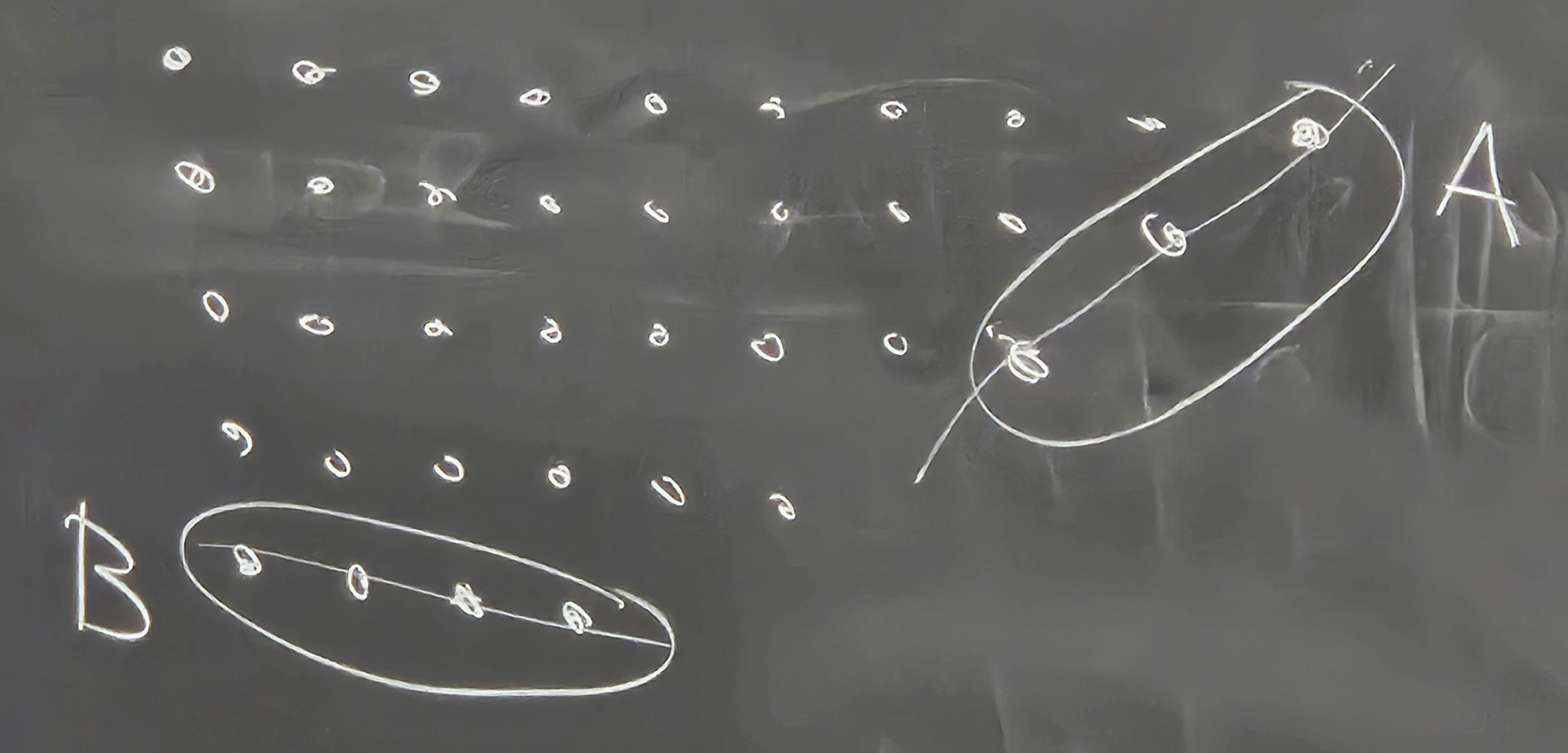
Then we see that we are in case I. Applying the operation, we have
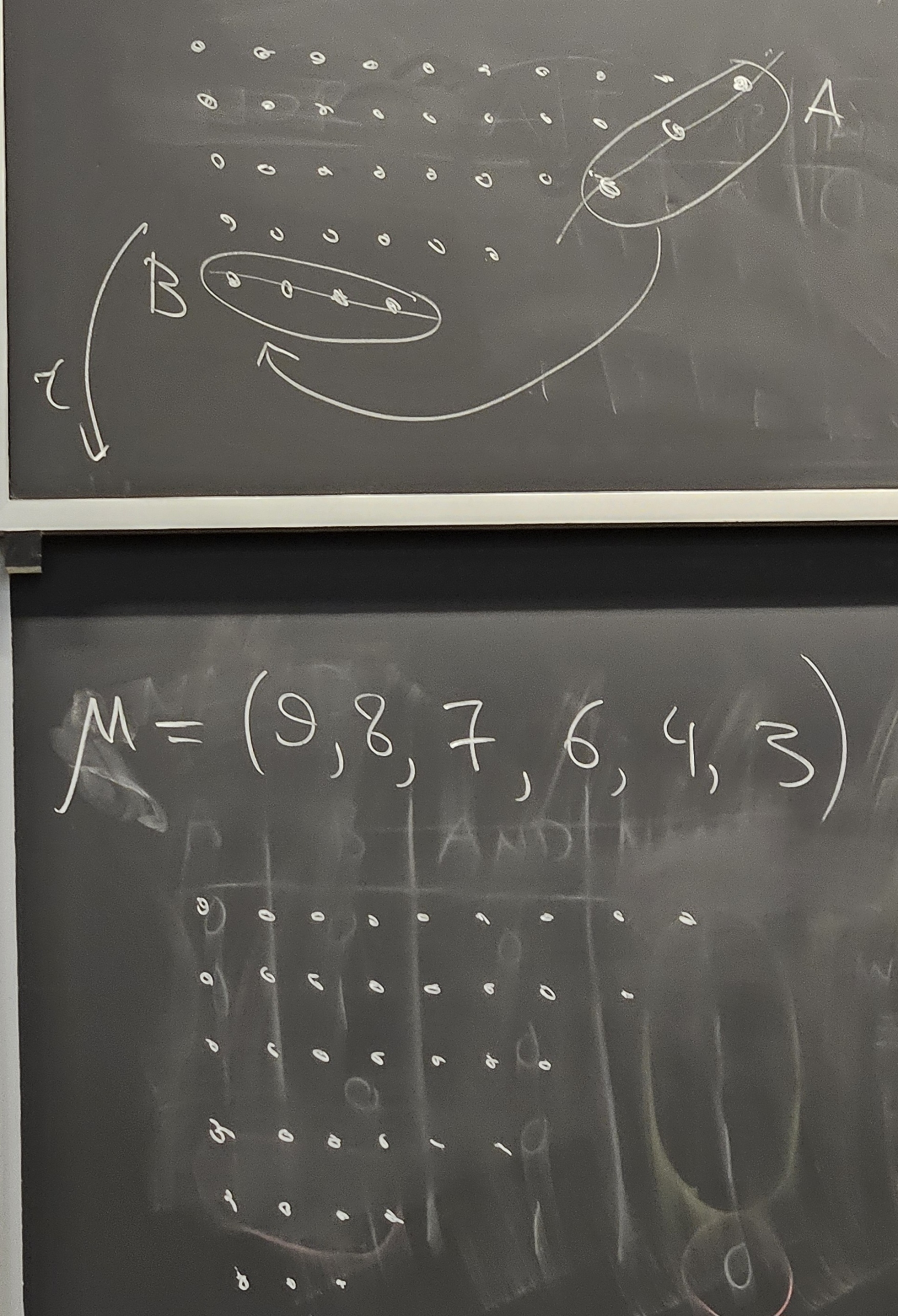
and applying
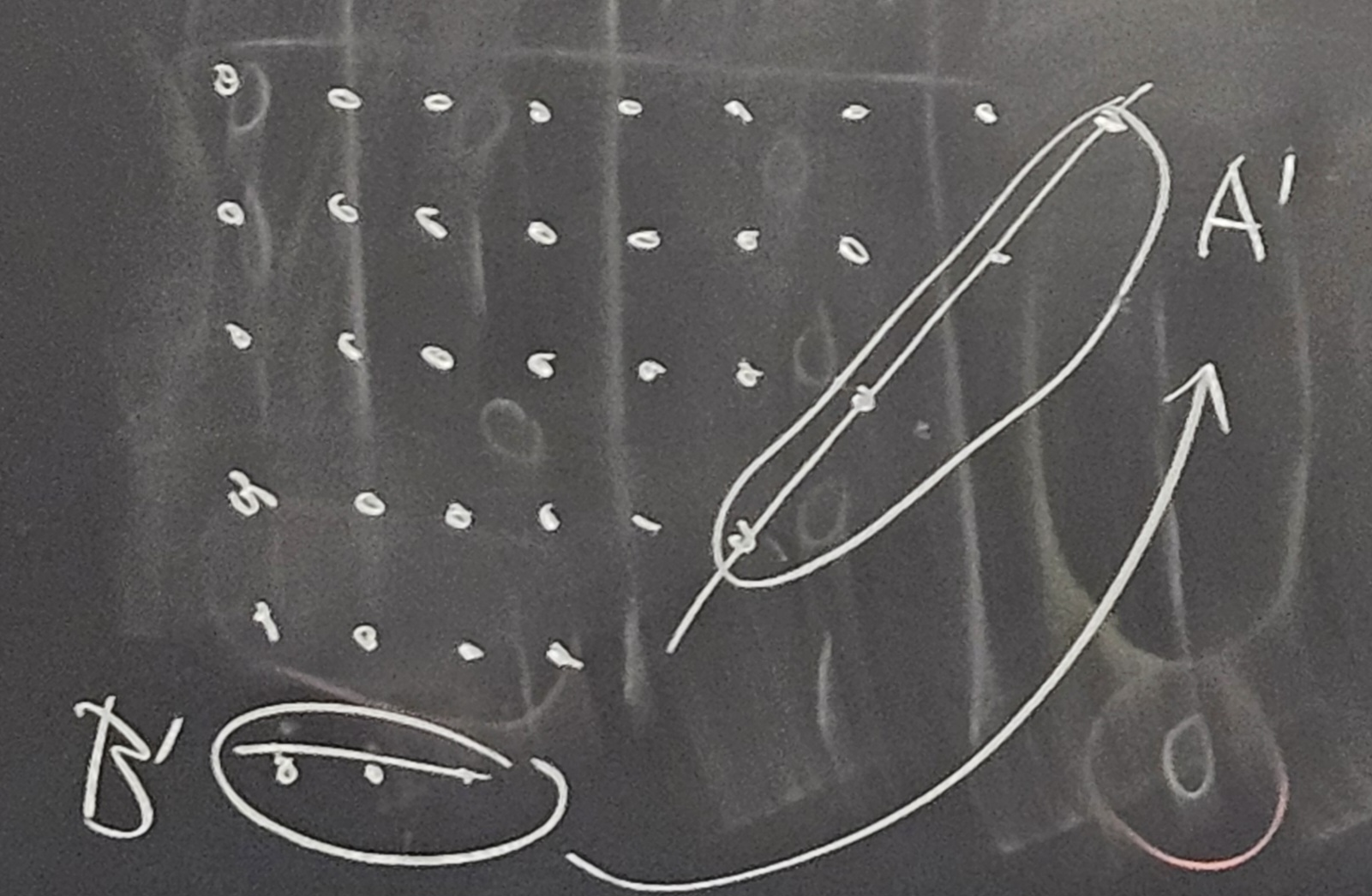
Here is another example, in which we are in case 2 first, and then 1: